Where Giants Fall - v0.62 Patch Notes
v0.62 opens the Giantforge between stages, turns sliding into a chargeable Power Slide, rebuilds the Wheel of Fortune around eight prizes, rearms Phalanx with shrapnel, and shortens the Journey to a single Ritual Siege.
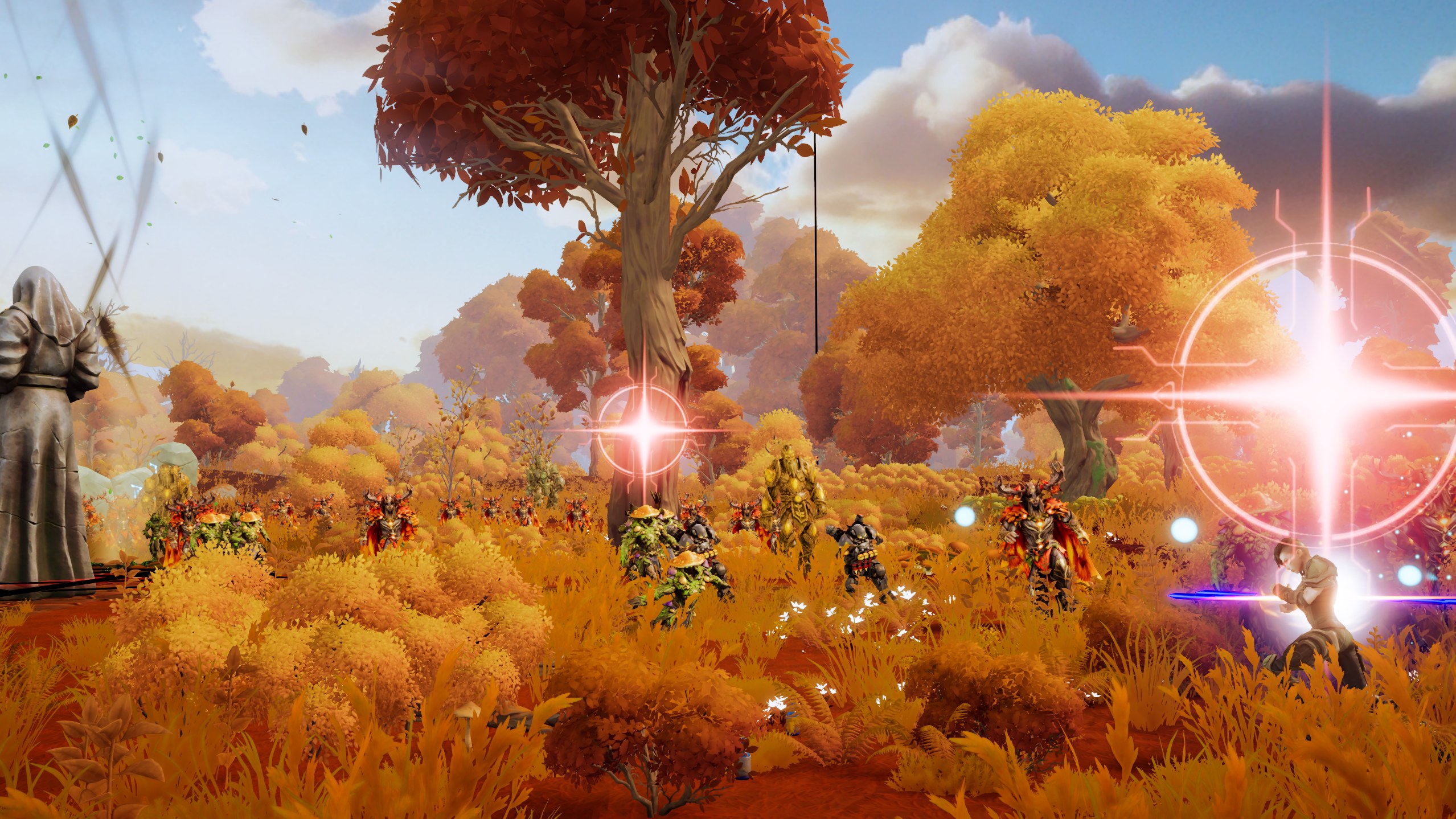
Where Giants Fall v0.62 adds a second place to spend what a run gives you, and a new way to move through a stage.
Between stages, the Giantforge now sells enhancements for the weapons you are already carrying. Thirteen of them are Legendary — one per weapon, each one changing how that weapon fights. A few of them pay for their power by taking a permanent bite out of your maximum health.
Sliding has become a Power Slide: charges to spend, slopes that genuinely matter, and ledges you can ride straight off into the air. The Wheel of Fortune has been rebuilt around eight prizes and can now honestly give you nothing. The Journey is one stage shorter. Phalanx has traded his ruptures for shrapnel and stopped standing still while he throws it.
v0.62 playtest clips
A handful of clips from playtesting the v0.62 build. Not a tour of everything below — just some of it in motion.
Major Highlights
- The Giantforge opens between stages and sells weapon enhancements, including 13 Legendaries — one per weapon.
- Some enhancements pay for their power with a permanent cut to your maximum health, capped at 40% across the whole forge.
- Sliding is now a Power Slide built on Dash charges, with real slope physics and airborne rides off ledges.
- The Wheel of Fortune has eight prizes, honestly sized wedges, and a Bust result that pays nothing.
- Fortune’s Reach, Fortune’s Blow and Triple Omen now work for the whole run instead of only at the wheel.
- A Journey holds one Ritual Siege instead of two. Endless opens gentler to match.
- Ironfall Salvo and Shrapnel Wasteland replace Phalanx’s Inner and Outer Rupture, and he no longer roots himself to cast.
- Golden Gun has been brought down across its entire track.
- Damage numbers land on the body of very large enemies. Healing gets its own mint-green stream.
- Overtime no longer scatters random damage zones across the ground. Instead the world itself distorts harder the longer you stay.
- Autumn is no longer drenched in orange.
- The game starts fast.
The Giantforge
A forge now waits between stages. Clear a stage and you can open it from the summary screen.
Weapon levels build a weapon. The forge specialises it. Enhancements belong to one named weapon and stack up to three ranks, and every offer is tailored to the weapon it names — a weapon that cannot critically strike is never sold a critical enhancement, and a weapon with no attack rhythm is never sold attack speed.
You get three offers per visit, and the three slots have different jobs: one safe improvement, one bargain with a real cost, and one wildcard that can be anything. Buy none, some, or all of them. Reroll as many times as you can afford — there is no per-shop limit, and a reroll replaces all three offers, including cards you already forged. Leave whenever you like. Nothing is ever forced on you.
Twenty enhancements are shared across the arsenal, from plain damage and attack speed to bargains that trade one strength for another:
- Giantbane sharpens a weapon against giants specifically.
- Perfected Violence makes your critical hits devastating and everything else weaker.
- Unstable Acceleration makes a weapon faster and wilder.
- Glass Edge trades maximum health for critical chance.
- Leeching Temper teaches a weapon to drink what it spills.
The bargains
Every card in the forge is bought with gold. What makes a bargain a bargain is what the enhancement itself does to you once you own it: Blood Price raises a weapon’s damage and permanently cuts your maximum health, and Glass Edge does the same for critical chance. Each rank you buy charges that cost again.
The card shows exactly what you will be left with before you commit. Across a whole run the forge will never let you give up more than 40% of your maximum health, and buying a card can never kill you.
All weapon lifesteal now draws from one shared recovery limit, so no single weapon can out-heal a fight on its own. Lifesteal shows a healing number whenever it actually restores health.
The Legendaries
Thirteen of them, one per weapon. They only appear once you have cleared a boss, they cost a fortune, and you may only carry one per weapon. Choosing which weapon gets one is the point.
- Absolute Zero — every fourth Frostwave is colossal and freezes lesser enemies.
- Abyssal Reckoning — every fifth Demonlash swing is a huge frontal lash.
- Cataclysmic Tracers — every twenty-fifth bullet is an explosive round.
- Gravity Inversion — every fourth Manaburst drags enemies in before it erupts.
- Heaven’s Verdict — every fifth cast calls down a strike that chains outward.
- Alpha Fang — every fifth throw hurls a colossal Fang at the strongest enemy near you.
- Siegebreaker — every fifth volley is an enormous high-arcing rocket.
- No Appeal — every golden execution ends with a miniature Golden Verdict.
- Ancestral Warpath — your guardian spirits leave their formation and hunt.
- Endless Reaping — every axe carves two more passes before it rests.
- Phoenix Heart — every fireball ends in a Backdraft.
- Black Bloom — every plagued death opens a vast toxic bloom that infects what it touches.
- Splintering Sky — your shuriken shatter into shards, and those shards shatter again.
Luck improves forge rarity rolls. Epics can turn up rarely before the first boss, and Legendaries are substantially easier to see after one.
Each card shows the weapon it enhances, what it gives, what it takes, and the price, at a size you can read from the couch. Cards that simply raise numbers now show only those numbers. Legendaries keep their written description, because what they do to a weapon cannot be put in a list of numbers.
Your forged enhancements are listed per weapon in the Run Overview, Legendaries and rare enhancements first, alongside how much maximum health you have given up so far and how much the forge will still let you trade.
Power Slide
Sliding is now a Power Slide. You carry three Dash charges. A normal Dash still costs one; a Ground Power Slide or an airborne Power Dive commits two at launch. Release before 1.2 seconds to keep the last charge for an emergency Dash, or keep holding and automatically burn it for another surge.
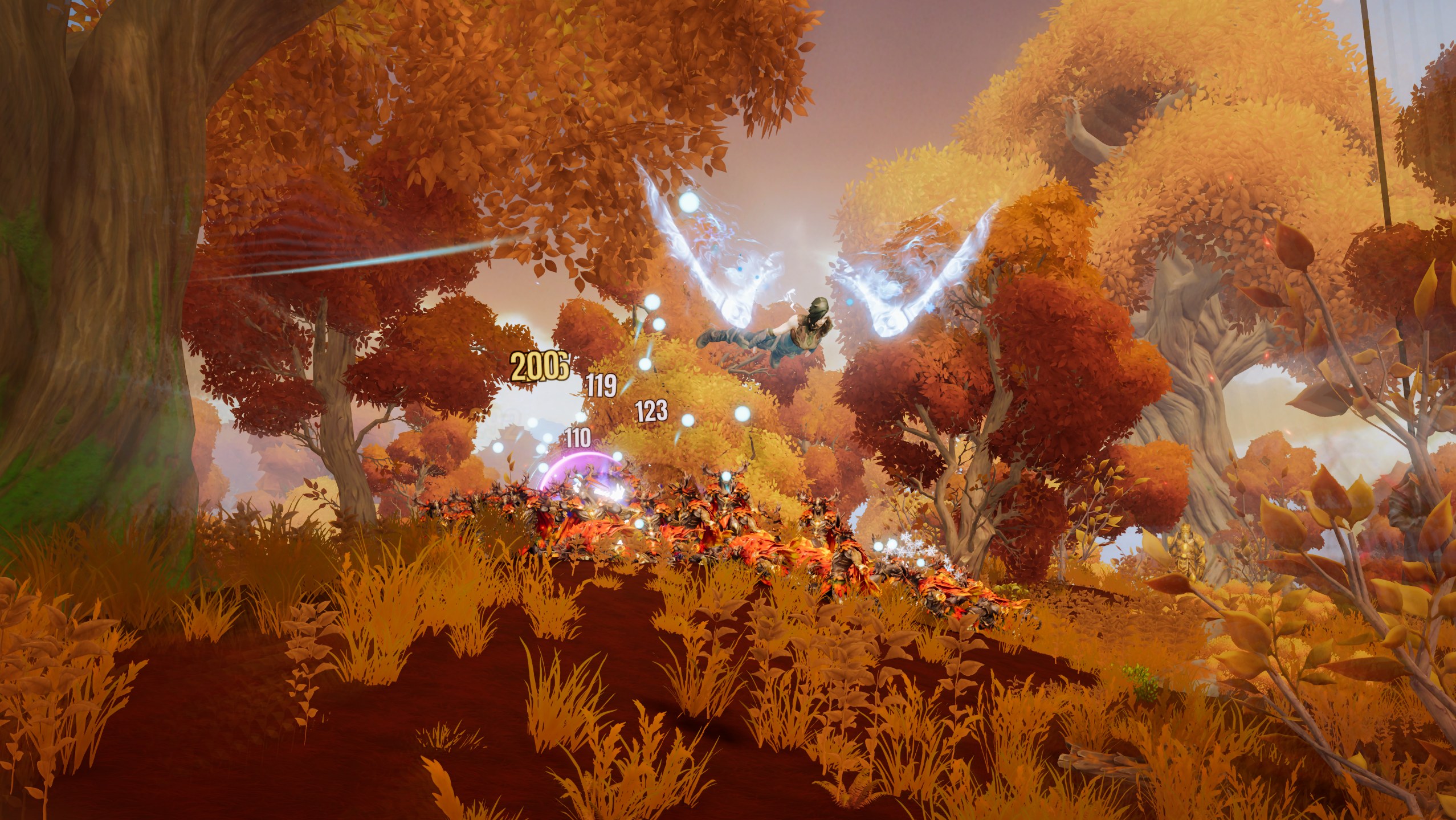
A Power Slide runs out of charges instead of stopping. Once the last one is spent the speed bleeds away on its own and you keep sliding for as long as you hold the button, settling into a gentle slide rather than snapping back to a run. Let go at speed and you come straight out into a full-speed run — no stumble, no reset, still pointed where you were going. Slide faster than you can ever run and you exit at your top running speed.
Hills matter now. A slope genuinely accelerates you and holds the speed far longer, while sliding uphill drags you down fast. Ride off a real ledge or ramp and you keep going: the wingsuit pose takes over in the air, and you drop back into the slide on landing. Tiny ground-contact gaps on slopes stay grounded instead of flickering the wingsuit. A fresh airborne Power Dive spends its two charges immediately; with fewer than two, it does not activate.
At high slide speed, lesser enemies are thrown out of your way — faster means further. It does no damage, and giants, champions and bosses do not budge.
A Power Slide gives no invulnerability. Dash is still the safe option, and the choice is whether to keep your charges for it.
Giantstride speed now eases in and out instead of snapping, so building momentum reads as acceleration and losing it reads as slowing down. It is also more forgiving when you curve while running, and a forward jump keeps your earned speed and continues building it exactly as running would, without awarding a free burst at takeoff.
Sustained high-speed travel, wingsuit dives, dashes, and Human Catapult flights now gain restrained edge streaks and short character echoes while the centre of the screen stays clear. The speed effect has been softened so it supports motion without obscuring combat.
The Wheel of Fortune
The wheel has been rebuilt around eight prizes: Bust, Gold Rush, Golden Jackpot, Giantforge Enhancement, Ability Fortune, Premium Enhancement, Fortune’s Hoard and Giant’s Fortune. The old spread — item drafts, player level-ups, refunds, free spins and the loot-goblin mark — is gone.
Every prize now feeds a system you already care about. Gold buys forge cards, enhancements go straight onto a weapon you carry, and Ability Fortune advances an active ability you actually have equipped.
The wedges tell you the truth. Each slice is sized by how likely it is, so a thin sliver really is a long shot and the fat ones really are the common results. Bust and Gold Rush are a fifth of the wheel each; Giant’s Fortune is a 3% sliver.
Bust is real. One spin in five wins nothing at all. The wheel is a gamble again, not a vending machine.
- Gold Rush pays double what a first spin costs. Golden Jackpot pays quadruple. Both are measured against the opening price, so spinning repeatedly can never inflate its own payout — and a free spin still pays a full prize.
- Premium Enhancement is a guaranteed top-tier forge card: the Legendary you would otherwise have to save a fortune for.
- Fortune’s Hoard hands you an enhancement and an ability upgrade together.
- Giant’s Fortune, the rarest result on the wheel, gives a Premium enhancement, a normal enhancement, and two ability upgrades at once.
Higher Luck pulls you away from Bust and toward the rare prizes, and the top three respond to it most. At neutral Luck the odds are exactly what the wedges show.
Ability Fortune draws from the abilities you have equipped, so it can no longer hand you a draft for something you are not using. If every equipped ability is maxed it widens out rather than wasting the prize.
A new summary screen spells out exactly what you won — naming the enhancement, its rarity and the weapon it landed on — instead of hiding a three-part prize behind one icon. A single enhancement now arrives as a small centred card you can dismiss rather than a full-screen panel, and multi-reward Fortunes lay everything out side by side, sized to fit however many landed. Ability Fortune goes straight to the ability draft, with no redundant reward card announcing it first.
Spin prices still climb as you spin, and wheel tickets still bank up — five at most, three in a row before you pay again. Your spin count and banked tickets now survive a reloaded run. They used to quietly reset to the cheapest price.
Fortune items
These three items used to do nothing unless you were standing at a wheel. They now apply for the whole run, wherever you are.
- Fortune’s Reach — +30% Gold Gain.
- Fortune’s Blow — +30% Luck, which now reaches the wheel, the forge and your loot alike.
- Triple Omen — +8% Damage, Attack Speed and Range.
- Lucky Bones has left the drop pool, including the Gambling Man’s shop.
The Journey
A Journey now holds a single Ritual Siege instead of two. The road is one stage shorter: two Wilds, one Rite, two Giants, then Endless.
Endless opens a little gentler to account for arriving with one stage less of levels, loot and forge work behind you. Enemies there start with 12% less health and hit 10% softer. Everything past the opening ramps exactly as it did.
Phalanx
- Phalanx’s orbiting tech-orb attack is now called Iron Litany. The Bishop keeps Rosary of Judgment.
- Darksteel Onslaught blades are 10% bigger when Phalanx throws them. The Iron Tyrant and the ritual giant throw theirs at the old size.
- Inner Rupture and Outer Rupture are gone. Phalanx tears the ground open with shrapnel instead.
- Ironfall Salvo replaces Inner Rupture. Phalanx slams the ground and a storm of shrapnel rains down around him for 7 seconds. Standing in it costs 75 health a second, so leave — the burning ground stays where it fell, and Phalanx does not.
- Shrapnel Wasteland replaces Outer Rupture. Nine huge patches of falling shrapnel erupt across a wider battlefield area and burn for 8 seconds. Their spacing and larger protected pockets still guarantee somewhere to stand; finding it before the shrapnel finds you is the fight.
- Neither ability holds him still any more. He plants the shrapnel and walks straight back at you, and he can throw the next thing while the ground is still burning.
- Wall of Death no longer locks him down either. He raises the wall and immediately carries on fighting; the wall keeps travelling on its own.
- He no longer runs through his abilities in the same order every fight. Everything he knows gets used once before anything repeats, but which comes first is different every time — and he never throws the same one at you twice in a row.
- The unexplained four-second pause when his remaining attacks were unavailable is gone. His cooldowns, recoveries, telegraphs and attack speeds now accelerate smoothly as his health falls, reaching 45% cooldowns, 80% cast timing and 130% travel speed near defeat.
Weapons
- Golden Gun has been brought down across its whole track rather than at one level, so the weapon still grows the way it always did — it just no longer outruns everything else. Executions hit for less, ricochets carry less, and the Ultimate hits softer. Level 5 gives +20% critical chance instead of +25%, Level 7 takes 18% off reload instead of 20%, Level 8’s golden echo drops to 40%, Level 11’s shell recovery lands at 16 seconds, and Level 13 leaves survivors 15% more vulnerable instead of 20%.
- Demonlash no longer swings at nothing. Like the other close-range weapons it waits until something is actually in reach.
- Razor Shuriken no longer throws at targets it has already lost. It confirms its target is alive and within reach every time it goes to fire.
Abilities
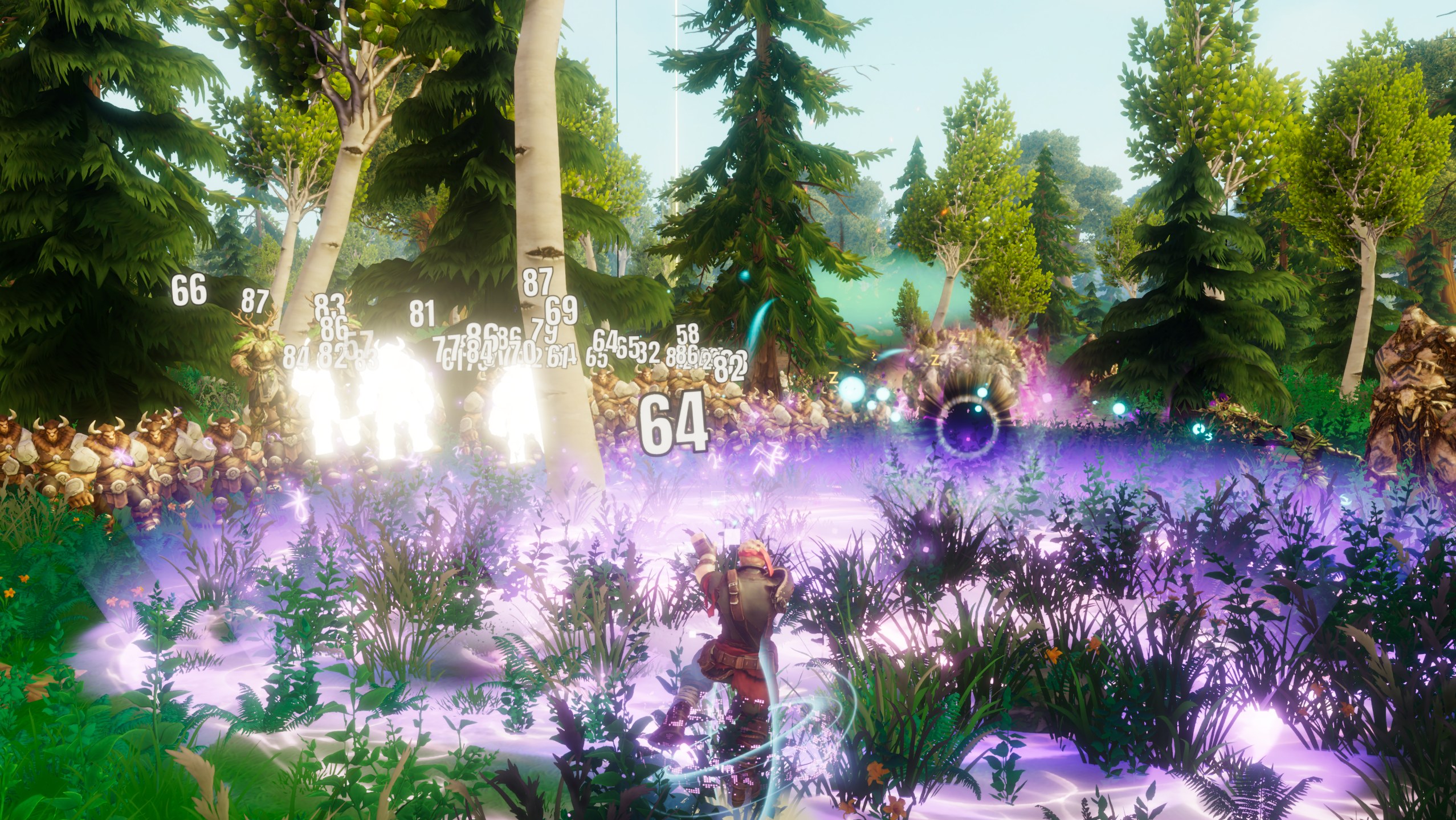
- Skybreaker’s Heaven’s Descent now lands where you aimed, immediately. It used to march a line of strikes from you toward the target, which meant the main bolt arrived last and your aim resolved late. The great bolt now hits first, at full size, and the lesser strikes spiral outward from the crater.
- Manaburst’s Singularity collapses into a proper singularity centred on the blast rather than a flat disc on the ground. It also hauls enemies in at half the speed, gathers from a smaller area, and its pulses hit for less — it was collapsing entire arenas onto one point faster than the fight could read.
- Void Pull has a real black hole at its centre. The collapsing core and the warp it tears in the world are now one object: both sit at a single point just off the ground, at one size. The first levels get the full-size black hole instead of a small one that grew as the ability levelled. The old purple vortex and rings are gone.
- Human Catapult’s landing blast now covers 60% of its previous ground area, and the airborne marker shrinks with it so the warning always matches the damage. Charging it no longer slows your movement.
- Frost Nova reaches 20% farther, with its ice burst growing to match.
- Dragon Breath’s final channeled form keeps enemies much closer to the ground and pushes them slightly less far away.
- Screen distortion is less overpowering across the board. Void Pull and Manaburst blacken and warp less of the scene, Earthspikes’ final level-8 pulse is now only slightly stronger than its first two, and Frostwave’s ultimate distortion follows the actual waves instead of washing over the whole screen.
- Where the world bends, it now picks up a restrained hint of the ability’s own colour. Cyclone Dash, Dragon Breath, Flash of Light and Frostwave warp the world along the direction they actually travel, so the effect follows the attack rather than washing over everything. The centre of the screen and your gameplay markers stay clear.
Combat feedback
- Machine Gun, Golden Gun, and Fireball hits now land with a tiny white-hot contact flash, a snap of light across the enemy, and a handful of weapon-coloured sparks.
- Critical hits read more sharply, while rapid fire, explosions, and damage over time stay restrained so dense fights remain readable.
- Damage numbers land on the body of very large enemies instead of around their ankles. Morvessa, Phalanx and the Iron Tyrant now show their damage roughly at hip height, and the placement scales with whatever size the enemy actually is. Normal-sized enemies are unchanged.
- Healing numbers rise in a compact mint-green stream from your feet and gather inward, making them immediately distinct from damage. Rapid lifesteal and regeneration ticks combine into one readable total, while major heals still appear at once.
- Ancient Spirits hold a gently moving formation that keeps pace during high-speed travel instead of drifting over you. Their hit flashes are compact but clearly visible again.
- Suicide enemies detonate before crowding into you and deal more damage with a broader blast. Their explosions give a short outward shove instead of launching you into the sky, and clustered blasts cannot stack into repeated knockups.
- Enemies held frozen at the start of a stage or by an effect no longer slide down sloped ground.
Overtime
Overtime used to scatter random damage zones across the ground. They are gone. In their place the world itself begins to distort, and the distortion keeps building the longer you stay past the timer — so the pressure of overtime is something you can see closing in around you rather than a hazard you have to spot underfoot.
Biomes
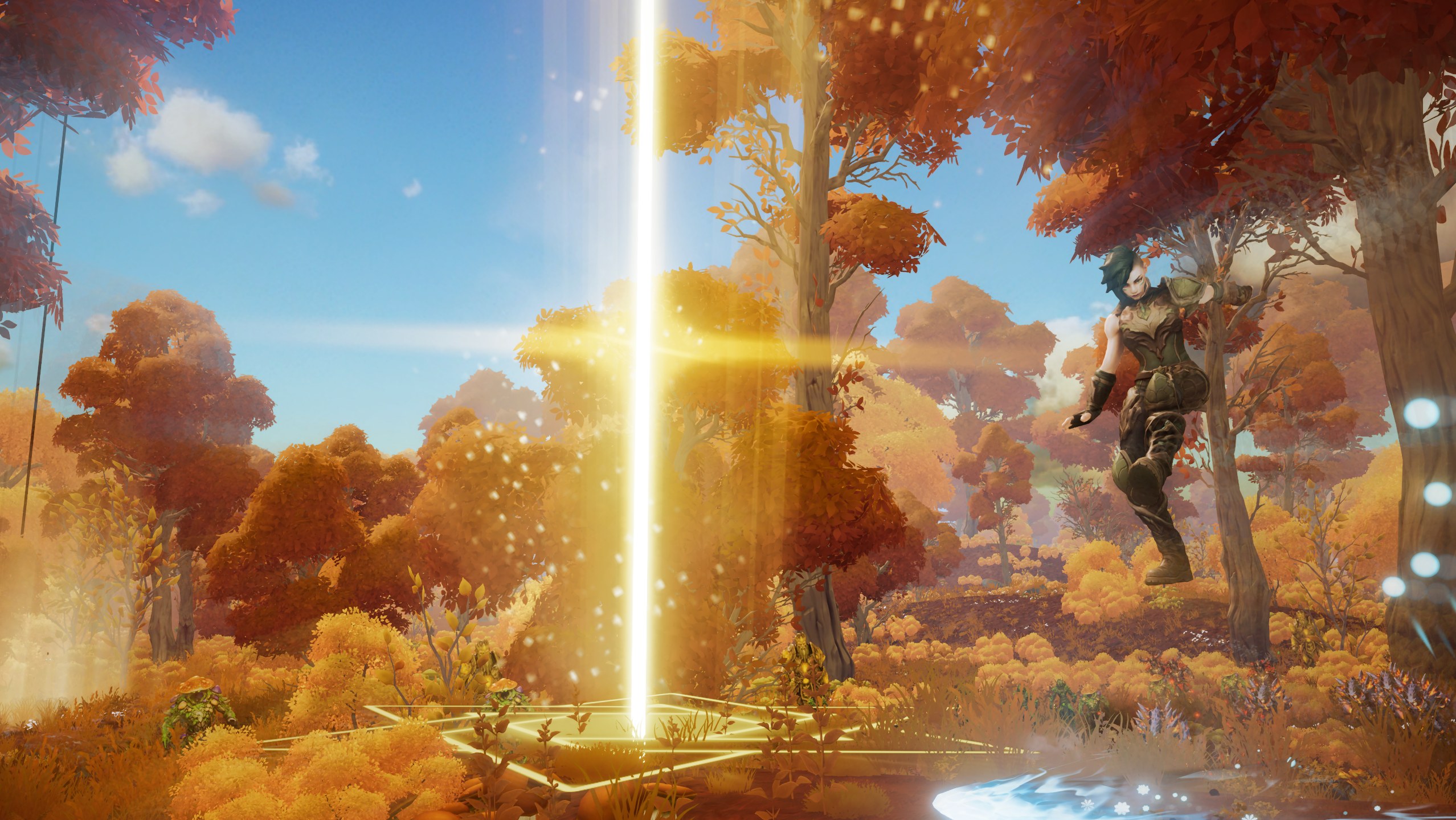
Autumn is no longer drenched in orange. The pass that brightened it had pushed the sky, fog, ambient light and sun all warm at once, so everything glowed the same colour. The brightness stays; the light is neutral again and the season’s colour comes from the trees.
Loot
- Chest drops have been rebalanced onto a single rate across the whole game, tuned for roughly five to seven kill-dropped chests in a regular stage. Hidden chests and the loot goblin’s chest sit on top of that, untouched.
- Giants under Giant Pressure drop chests at twice the rate of ordinary enemies, so hunting one is still worth the trouble.
Audio
- The Chain Lightning ultimate no longer cuts the music out. Dense bursts of combat sound can no longer push the soundtrack off the mix.
- The Singularity’s rumble no longer keeps playing after the field is gone. It could survive a stage change and only stopped when the run ended.
- Giant’s Answer now signals each escalation with its own horn.
Startup and Main Menu
The game starts fast. The menu used to load an entire forest behind it, which froze the window long enough for Windows to call it unresponsive — twice, once on the way in and again on the way to the first stage. That backdrop is gone.
- The main menu now uses the new key art, with your chosen character standing over it. It fills any display, ultrawide included, without stretching.
- Menu music waits for the finished menu and starts at full intended volume. Your selected character loads in the background and is present before the menu appears.
- Your character stands on the right, above your loadout, at full height. They used to be framed so close that their head and feet were cut off. Every character is framed the same way regardless of how tall they are.
- The loading screen keeps moving when you start a run or drop into a new biome, instead of locking up part way through.